Content note: this post discusses domestic abuse.
On The Adored Woman, we talk a lot about learning to receive the love of an emotionally mature, relationship-ready man. But this episode asked a harder question. What if some of the things that feel most like love at the start are actually the biggest warning signs?
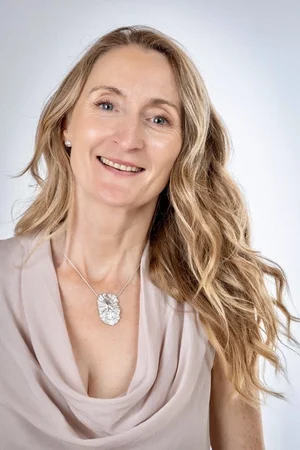
My guest was Dr Kate Okonkwo. Kate has been a qualified social worker for more than 25 years, rising to head of social work, and has spent the last twelve years teaching the next generation of social workers. This year she was awarded her PhD for research into domestic abuse among Black African and Caribbean women.
One of the first things she made clear: this doesn't only happen to women with low self-esteem. Kate has worked with doctors, lawyers and community leaders who found themselves in abusive relationships. Domestic abuse, in her words, "has no borders".
What domestic abuse actually is
In the UK, the Domestic Abuse Act 2021 defines it. Kate describes it simply: a pattern of behaviour one person uses against another to control them. The key word is pattern. One bad moment isn't the whole story. The same moment, again and again, is.
It rarely starts with violence
"Domestic abuse doesn't usually start with violence," Kate told me. It starts with flattery. With a huge amount of attention and pursuit. With a man going to great lengths to show you that you're the best thing that's ever happened to him.
Then, once you relax into it, things start to shift.
Six early signs to notice
1. How he receives your no. This was the sign Kate came back to most. If you say no and he says, "All right, don't worry, I'll get it myself," that's one thing. If he says, "Why can't you just do what I ask?", that's another. Pay attention to whether your no is allowed to stay a no.
2. Pressure to speed things up. One woman in Kate's research had a man ask to move into her flat after two weeks. When she hesitated, the questions began: Are you seeing someone else? Don't you love me enough? A healthy relationship can bear a slower pace.
3. Making you choose. "I want to see my parents today" met with "So you're putting your parents before me?" Once might be insecurity. As a pattern, it's about pulling you away from the people who support you.
4. Your money becoming his money. Not being able to shop without him involved. Your income folded into his. Kate is clear that these can be mistaken for love, but they're about control.
5. "You're being too emotional." When he does something upsetting, then makes your reaction the problem, you start to doubt yourself. That self-doubt is the point.
6. Family who take his side. If his mother or sisters push you to change into who they want you to be for him, and he doesn't stand up for you, Kate says something isn't right. The relationship is between the two of you.
When the people around you say "stay"
Kate's research named something I'd never heard before: collective abuse. When the women she interviewed finally spoke up, many were told by family, faith communities and even professionals to go back, pray more, be more patient and look after him better.
When everyone around you says this is normal, it becomes very hard to trust what you know. Part of what makes Kate's work so powerful is that it gives that experience a name.
Minimise, normalise, justify
Kate described three ways women explain abuse away, often to protect themselves from shame and rejection.
Minimising: "Maybe the children were too noisy. Maybe it's my fault."
Normalising: "My mother went through this. Why am I making so much noise?"
Justifying: "Next time I'll make sure everything is perfect for him."
Her answer to all three: what's happening is not your fault. Someone has chosen to use their power to control you.
If you're in it now
Kate was clear that the question isn't "Why doesn't she leave?" It's "How do we support her to leave safely?" Leaving can be the most dangerous time, so planning matters. Kate suggests:
Keeping important documents somewhere safe: passports, ID, marriage certificate, your children's paperwork.
Saving whatever money you can, even small amounts.
Knowing the helpline number before you need it.
A specialist helpline can help you make a safety plan that fits your situation.
If you're worried about a friend
Listen to her and believe her. Many abusive men are charming in public, so she may already expect not to be believed. Tell her you're there and ask how you can help. Then share the helpline number in whatever way is safe for her.
What I took from this conversation
I've always helped women trust their gut. When I was dating, I gave myself permission to walk away from a man without having to explain it, even to myself. Kate's work showed me how much that permission matters, and how hard it can be to claim when your whole world tells you to stay.
Kate's final message was this: "You matter. You are adored and valued. Your life matters."